When Tim Cook, CEO of Apple Inc., penned an emotional open letter earlier this month, it wasn’t just corporate housekeeping. It was a heartfelt tribute to the man who started it all, setting the stage for one of the biggest milestones in tech history: Apple’s 50th birthday on April 1, 2026.
The letter, released on March 13, 2026, serves as both a personal reflection and a public acknowledgment of Steve Jobs's enduring legacy. As the company prepares to celebrate five decades since its founding in a Los Altos garage, Cook’s words remind us that behind every sleek device is a vision rooted in simplicity, rebellion, and relentless innovation.
A Garage Beginning That Changed the World
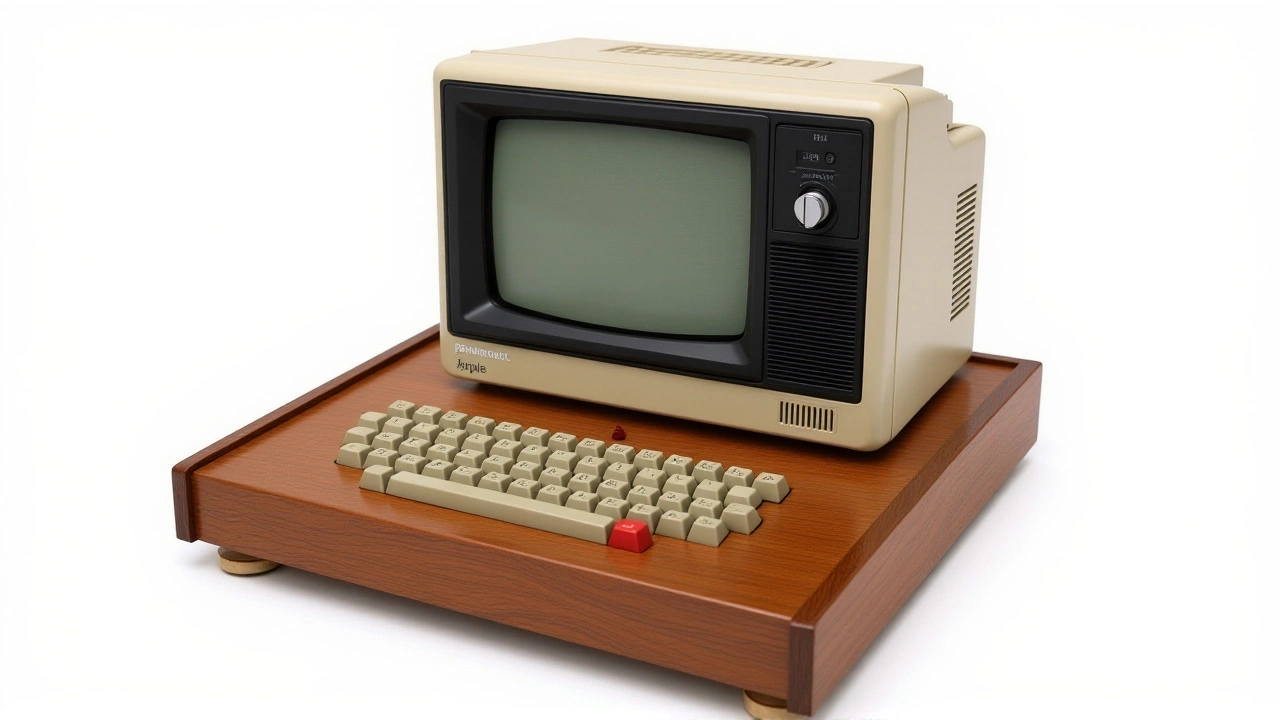
It’s easy to forget where it all began. On April 1, 1976, Steve Jobs and Steve Wozniak officially incorporated what they called “Apple Computer Company.” They didn’t have venture capital or boardrooms. They had a Volkswagen bus (which Jobs sold) and a scientific calculator (Wozniak’s contribution), pooling roughly $1,300 to fund their dream.
That humble start in Jobs’ family garage in Los Altos, California, quickly exploded. By 1980, just four years later, Apple went public. Sales skyrocketed—up 700% after the launch of the Apple II, reaching $139 million. The Macintosh arrived in 1984, introducing the graphical user interface to the masses. But the journey wasn’t linear. Jobs was ousted in 1985, only to return in 1997 after Apple acquired NeXT, the company he’d founded in exile.
His return marked a renaissance. Alongside designer Jony Ive, Jobs oversaw the creation of the iMac, iPod, iPhone, and iPad—products that didn’t just enter markets; they created them. Today, those devices are woven into the fabric of daily life worldwide.
The Man Behind the Myth
Jobs wasn’t just a tech mogul; he was a cultural icon. Born Steven Paul Jobs on February 24, 1955, in San Francisco, he was adopted by Paul and Clara Jobs. His upbringing in Silicon Valley’s early days shaped his worldview, but so did his spiritual journeys. In the late 1970s, Jobs spent seven months in India, returning with shaved head, simple clothing, and a deep interest in Zen Buddhism and Jainism.
This influence showed up in his product philosophy: minimalism, focus, and elegance. “Stay Hungry, Stay Foolish,” he told Stanford graduates in his famous 2005 commencement speech. Those words became a mantra for entrepreneurs everywhere.
Beyond Apple, Jobs co-founded Pixar Animation Studios, leading it to become a creative powerhouse before Disney acquired it in 2006. He served on Disney’s board and executive-produced *Toy Story*, proving his genius extended beyond hardware into storytelling.
Cook’s Letter: A Bridge Between Eras
In his recent letter, Cook didn’t just recount facts—he captured feelings. While the full text hasn’t been widely published, reports indicate it emphasized gratitude, continuity, and respect for Jobs’ principles. For many employees and fans, it felt like a passing of the torch, not an end.
“Steve taught us that technology alone isn’t enough,” one insider noted. “It has to be paired with liberal arts—with humanity. Tim gets that. That’s why Apple still feels like Steve’s company, even though he’s been gone for over a decade.”
Cook took the helm after Jobs stepped down in August 2011 due to health issues. Jobs passed away on October 5, 2011, at age 56 from pancreatic cancer complications. Since then, Cook has focused on scaling operations, expanding services, and maintaining profitability—all while keeping the design ethos intact.
What’s Next for Apple?
As we approach April 1, expect more than nostalgia. Apple may unveil new products, partnerships, or initiatives tied to its golden jubilee. Past anniversaries have seen special editions, documentaries, or charitable drives. This time could include reflections on sustainability, AI integration, or next-gen computing.
Industry analysts suggest Apple might also highlight its evolution from a computer maker to a lifestyle brand encompassing music, fitness, finance, and entertainment. With revenues exceeding $390 billion annually, the stakes are higher than ever.
Yet, amid all the growth, the core message remains unchanged: innovation driven by purpose. Whether through AR glasses, spatial audio, or autonomous vehicles, Apple continues to push boundaries—but always with Jobs’ shadow guiding the way.
Legacy Beyond Numbers
Fifty years ago, two teenagers bet everything on a idea no one else believed in. Today, Apple stands as the world’s most valuable company, valued at over $3 trillion. But numbers don’t tell the whole story. What matters is how Apple changed behavior—how people communicate, create, consume media, and connect globally.
Jobs’ impact transcends sales figures. He inspired generations to think differently—to question norms, embrace failure, and pursue excellence. His belief that “design is not just what it looks like and feels like. Design is how it works” reshaped entire industries.
Even now, when engineers debate features or marketers craft campaigns, they often ask: “What would Steve say?” That question alone proves his presence lingers—not as a ghost, but as a compass.
Frequently Asked Questions
Why is Tim Cook writing about Steve Jobs now?
Cook’s letter coincides with Apple’s 50th anniversary on April 1, 2026. It serves as a reflective moment honoring Jobs’ foundational role and reinforcing the company’s values during a major milestone.
How did Apple get started financially?
Jobs and Wozniak raised initial funds by selling personal items—Jobs sold his VW bus, and Wozniak sold his HP calculator. Together, they gathered around $1,300 to build the first Apple I computers.
Did Steve Jobs work outside of Apple?
Yes. After leaving Apple in 1985, he founded NeXT and purchased Lucasfilm’s graphics division, which became Pixar. He led Pixar until Disney bought it in 2006, making him Disney’s largest individual shareholder.
What happened to Steve Jobs in 2011?
Jobs resigned as CEO in August 2011 due to declining health. He died on October 5, 2011, at age 56 from complications related to pancreatic neuroendocrine tumor. Tim Cook succeeded him immediately.
Will there be official events for Apple’s 50th anniversary?
While details aren’t fully confirmed yet, Apple typically marks such milestones with product launches, historical retrospectives, or community initiatives. Expect announcements closer to April 1, 2026.